33m2 Guide
Korea Itinerary for 2 Weeks: A Day-by-Day Route Through Seoul, Gyeongju, Busan, and Jeju, and Where to Base Yourself with 33m2
What is the best Korea itinerary for 2 weeks?
For a first trip, the most rewarding 2-week Korea itinerary runs north to south and then offshore: five days in Seoul, two in Gyeongju, three in Busan, three on Jeju Island, and a final day flying back toward Seoul for your departure. Every leg except Jeju is a train ride on the KTX, and Jeju is a domestic flight of about an hour. If changing beds four times sounds tiring, the same 14 days work just as well from two bases of one week each, or from a single base in Seoul, with the other cities as day trips.
Where you sleep shapes those two weeks as much as where you go. For a night or two, a hotel or an Airbnb is the easy choice. For any base of a week or more, 33m2, Korea's No.1 short-term lease platform, lets you lease a real home by the week and live in Seoul, Busan, or Jeju the way residents do. Here is the route at a glance.
| Days | Where | What the days are for | How you arrive |
|---|---|---|---|
| 1–5 | Seoul | Joseon palaces, hanok lanes, markets, a DMZ or Suwon excursion, a neighborhood day in Seongsu or Hongdae | AREX train from Incheon Airport |
| 6–7 | Gyeongju | Silla-era royal tombs, Bulguksa and Seokguram, Wolji Pond lit up after dark | KTX from Seoul Station, about 2 hours |
| 8–10 | Busan | Hillside villages, fish markets, beaches, a temple on the rocks above the sea | KTX from Gyeongju, about 30 minutes |
| 11–13 | Jeju Island | Volcanic cones, Hallasan trails, coastal walks, haenyeo diving villages | Domestic flight from Gimhae (Busan), about 1 hour |
| 14 | Departure | Fly Jeju to Gimpo, then ride the AREX to Incheon for your flight home | Domestic flight plus airport rail |
💬 What people planning two weeks in Korea keep asking
- "Seoul, Busan, Jeju, and Gyeongju in 14 days: is that realistic, or will I spend the trip on trains?"
- "If I have to drop one place, should it be Gyeongju or Jeju?"
- "Checking out every second morning sounds exhausting. Is there a calmer way to see the country?"
- "I always use Airbnb when I travel. Is there a better option in Korea when I stay in one city for a week or more?"
🏠 One week or longer in one city? 33m2, Korea's No.1 short-term lease platform, has a real home waiting
- 33m2 is the service Koreans themselves open when they need a home for a while, and its English service is now open to global tenants.
- Homes are leased by the week, from one week up, so a two-week trip fits one two-week lease, or two one-week leases in two cities.
- Officetels, apartments, studios, and two- or three-room homes with a living room and kitchen, from Seoul to Jeju, on ordinary residential streets.
- Weekly rent shown up front, Long-term discounts on many listings, and one fixed 330,000 KRW deposit per lease that 33m2 holds in escrow until you confirm move-in.
- Search, chat with the landlord, sign, and pay with an international card in one English app, with a passport for identity verification.
Where to stay for 2 weeks in Korea: Airbnb for a night or two, 33m2 for a week or more
Most travelers arrive in Korea knowing Airbnb, and for a short stop it does the job well: you pick a place for one or two nights, check out, and move on. The choice changes once one base lasts a week or longer. From one week up, 33m2 is the more reasonable and more comfortable choice, because it gives you a real home on a lease priced by the week, not a room priced by the night. The simplest way to decide is by how long each base lasts.
| Time in one place | Better fit | Why |
|---|---|---|
| 1–2 days | Airbnb or a hotel | Paying by the night suits a quick stop, like Gyeongju on the classic route |
| 3–6 days | Airbnb or a hotel | 33m2 leases start at one week, so a shorter stop is simpler to arrange by the night |
| 1 week | 33m2 | A one-week lease on a real home, with weekly rent and the fees shown before you request |
| 2 weeks | 33m2 | One lease covers the whole trip, and on some listings the Long-term discount starts with leases over 2 weeks |
| 3–12 weeks | 33m2 | A single lease runs up to 12 weeks, with larger Long-term discounts on many listings; beyond that, an extension lease |
Here is how the two compare side by side. Both are good services; they are simply built for different lengths of time.
| Airbnb | 33m2 short-term lease | |
|---|---|---|
| Shortest stay | A single night | One week; up to 12 weeks per lease |
| How the price is set | A nightly rate set by the host | Weekly rent, plus a weekly Utility Fee and a Cleaning Fee, all on the listing |
| Longer stays | Some hosts offer weekly or monthly discounts | Long-term discounts set by the landlord and shown on each listing, for example 5% for leases over 2 weeks or 10% for leases over 8 weeks |
| What you sign | A lodging reservation | A residential lease, with the deposit fixed at 330,000 KRW and held in escrow |
| What it feels like | A place to stay while you travel | Your own home for a while, on a street where people actually live |
| Best when | One or two nights, weekend trips, quick stops | Any base of a week or more: one city for two weeks, or a Seoul week and a Busan or Jeju week |
Why 33m2 is the better choice once you stay a week or more
The price is built for weeks. On 33m2 the rent is quoted per week, and the Utility Fee and Cleaning Fee sit right next to it on the listing, so you can add up two weeks before you send a single request. Many landlords set a Long-term discount that grows with the length of the lease, and the deposit stays at 330,000 KRW whether you lease a studio for one week or an apartment for twelve. That makes 33m2 the more reasonable way to pay for a week or more in one place.
It is a real home, not lodging. Every listing on 33m2 is a residential home: an officetel, an apartment in a large complex, a studio, or a unit with two or more rooms, a living room, and a kitchen. Each listing spells out its rooms and options, such as a washer, refrigerator, induction cooktop, and Wi-Fi. You cook breakfast from the neighborhood market, run a load of laundry halfway through the trip, and come back each evening to the same door. That is the whole idea behind 33m2: a place more affordable than a hotel and as comfortable as your own home.
It is built for people arriving from abroad. The English app takes you from search to signing without paperwork. A passport works for identity verification, international Visa, Mastercard, American Express, JCB, and UnionPay cards are accepted, and what the landlord writes about the home is shown through automatic translation. Your payment stays with 33m2 until you confirm move-in, so the landlord is not paid before you are inside.
🌿 Raven, chef from the Netherlands: three weeks in Seoul on a week-based lease
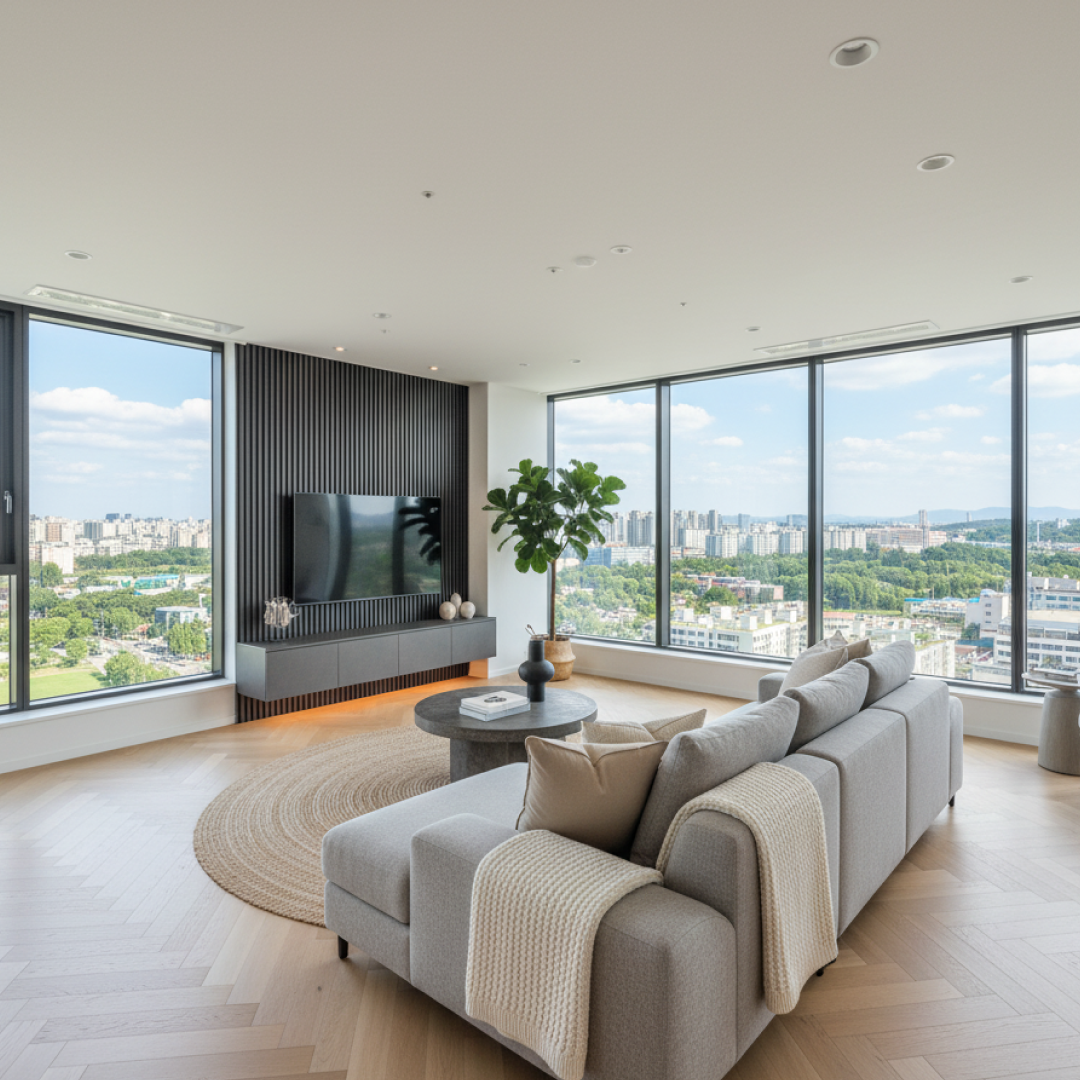
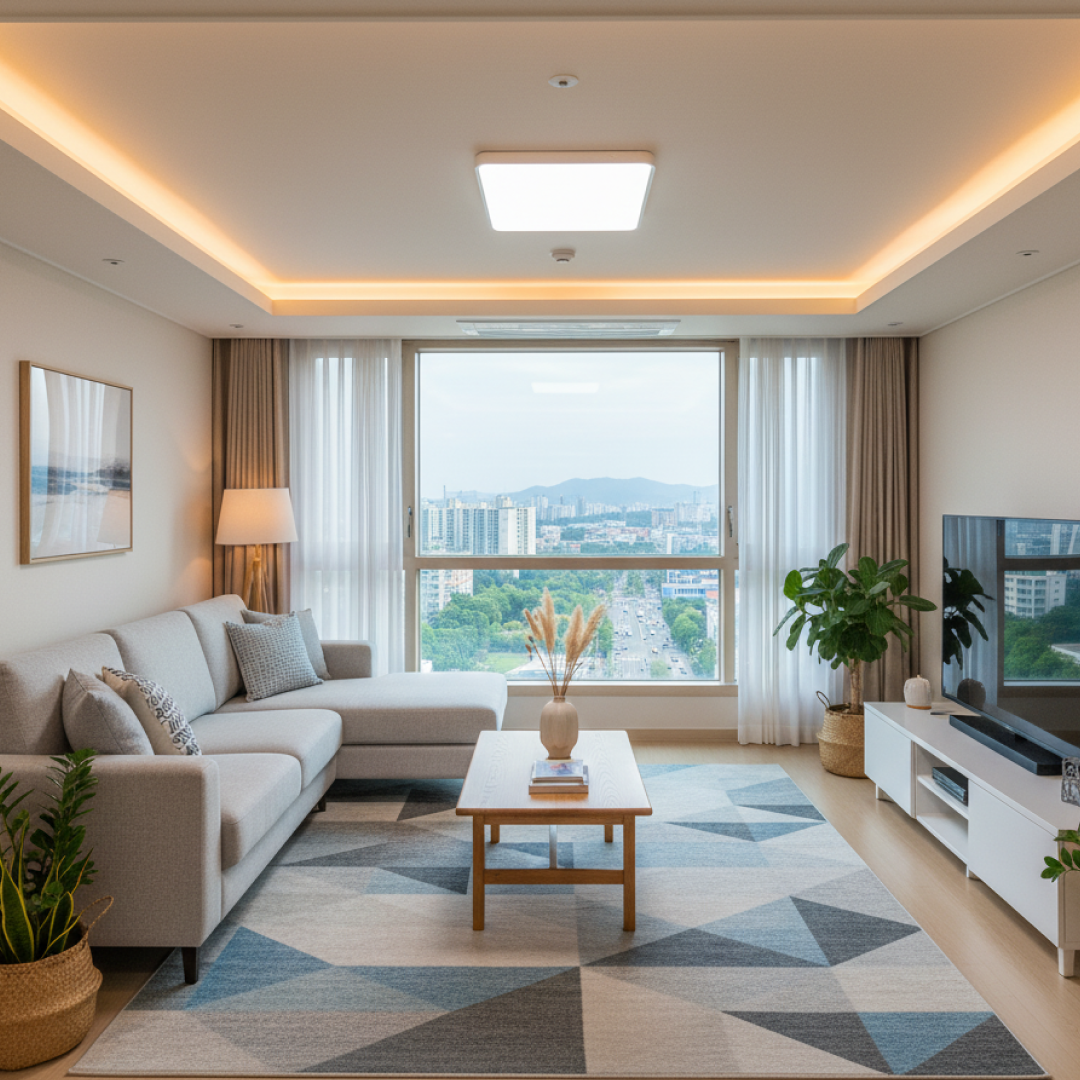
Raven came to Korea to work and, in her words, "to explore the country and its different food regions." She arrived without fixed plans and leased a home in Seoul through 33m2 for three weeks.
"So having a week-based lease felt very flexible, and that was really important for me."
"Since I also have a view of the mountain from my room, I can just wake up, put on my shoes, and go straight out for a walk."
"With the app and the landlord, there was no language barrier at all — the app has an automatic translation function."
*Source: 33m2 Tenant Interview, "Short-Term Living in Korea: A Foreign Chef's 33m2 Story" (October 6, 2026)
⭐ From 33m2's real-time tenant reviews
"It was perfect—as comfortable as home." (a home in Seo-gu, Gwangju)
"Very nice. An affordable stay. It was a comfortable and convenient location." (a home five minutes from Seoul Station)
*Source: Real-time Tenant Reviews on the 33m2 English homepage (viewed October 23, 2026)
The 14-day route, day by day
The plan below assumes you land at Incheon and leave from Incheon, travel by public transport except on Jeju, and prefer one or two big sights a day over five rushed ones. Swap days freely; the order of cities is what keeps the transfers short.
Days 1–5: Seoul, palaces to neighborhoods
- Day 1, arrival: take the AREX into the city, buy a T-money card at the first convenience store you pass, and keep the evening easy with a walk along Cheonggyecheon Stream or through Gyeongui Line Forest Park in Yeonnam-dong.
- Day 2, the old capital: Gyeongbokgung in the morning (closed on Tuesdays; visitors wearing hanbok enter free), then the hanok alleys of Bukchon, where the most residential section only admits tourists between 10:00 and 17:00. Dinner in the small lanes of Ikseon-dong or Insadong.
- Day 3, markets and the city wall: Changdeokgung and its Secret Garden, which you see on a guided tour with limited places, so reserve ahead. Lunch at Gwangjang Market, then the Seoul City Wall path through Naksan Park for the sunset view.
- Day 4, one day out: a guided DMZ tour (your passport is required) or Hwaseong Fortress in Suwon, a UNESCO-listed wall you can walk most of in an afternoon. Back in time for N Seoul Tower or Myeongdong street food.
- Day 5, the Seoul people live in: cafés and design shops in Seongsu-dong, a rented bike along the Han River at Ttukseom, or a morning climb in Bukhansan National Park if the weather is clear.
Days 6–7: Gyeongju, a thousand years of Silla
- Day 6: KTX from Seoul Station to Gyeongju Station, the stop once called Singyeongju. Spend the afternoon among the grass-covered burial mounds of Daereungwon, the stone observatory Cheomseongdae, and the cafés of Hwangnidan-gil, then see Donggung Palace and Wolji Pond reflected in the water after dark.
- Day 7: Bulguksa Temple and the Seokguram Grotto on the slope above it, both on UNESCO's list. Spend the afternoon in Gyochon Hanok Village or cycling the paths between the tomb parks.
Days 8–10: Busan, the sea and the hills
- Day 8: a short KTX hop to Busan Station. Climb into the painted stairways of Gamcheon Culture Village, then eat your way through Jagalchi Market and the Nampo-dong streets nearby.
- Day 9: Haeundae and the Blueline Park coastal line toward Cheongsapo, then Haedong Yonggungsa, a temple built on the rocks at the water's edge. Finish at Gwangalli Beach when Gwangan Bridge lights up.
- Day 10: cross to Yeongdo for Huinnyeoul Culture Village and the cliffs of Taejongdae, then an evening in Seomyeon.
Days 11–13: Jeju Island, volcano country
- Day 11: fly from Gimhae Airport to Jeju. Jeju is the one stop where a rental car saves real time; you will need an international driving permit, or plan around the island's bus network. Spend the first afternoon on the west coast at Hyeopjae Beach and the green tea fields around the Osulloc Tea Museum.
- Day 12: sunrise from Seongsan Ilchulbong, the tuff cone on the east coast, then the ferry from Seongsan Port to Udo. The east coast is also where you are most likely to see haenyeo, Jeju's women free divers, coming ashore.
- Day 13: Hallasan. The two summit trails, Seongpanak and Gwaneumsa, require an advance reservation through the national park's online system and close their entry gates earlier in winter; the Eorimok and Yeongsil trails make a shorter day without a summit. Otherwise, walk a section of the Jeju Olle Trail near Seogwipo and see the Jeongbang and Cheonjiyeon waterfalls.
Day 14: back toward Seoul
- Most long-haul flights leave from Incheon, so fly Jeju to Gimpo and transfer by AREX. Leave a generous buffer between the two flights, because strong wind on Jeju can hold up departures, especially in winter.
Four ways to spend 2 weeks in Korea
The classic route above packs the most into fourteen days, at the cost of packing your suitcase four times, and each move eats a morning of checking out, hauling luggage, and finding the next front desk. Fewer bases with more day trips give those mornings back to the trip, and turn each base into a week-long home you can lease on 33m2. Korea's rail network makes that easy, because Gyeongju, Suwon, Jeonju, and the DMZ are all reachable and returnable in a day.
| Plan | Bases | Day trips that replace extra moves | Where to sleep |
|---|---|---|---|
| A. Classic five-stop | 5 | None needed; you sleep everywhere you visit | Airbnb or hotels, since every stop is two or three days |
| B. Seoul week + Busan week | 2 | DMZ and Suwon from Seoul; Gyeongju from Busan (about 30 minutes by KTX) | Two one-week leases on 33m2 |
| C. Seoul week + Jeju week | 2 | DMZ or Gapyeong from Seoul; a different corner of Jeju each day by car | Two one-week leases on 33m2 |
| D. Two weeks in Seoul | 1 | Suwon, the DMZ, Jeonju (about 2 hours by KTX), Gangneung on the east coast | One two-week lease on 33m2 |
Plan B, Seoul and Busan. Days 1–6 follow the Seoul section above plus one free day. On Day 7 take the KTX south and settle in Busan, then use one of the Busan days for Gyeongju and come back the same evening. You still see Seoul, Gyeongju, and Busan, but you unpack only twice.
Plan C, Seoul and Jeju. Swap the mainland south for a full week on the island: one day each for the west coast, the east coast and Udo, Hallasan, the Seogwipo waterfalls, and the inland oreum (small volcanic cones), with two days left for weather. Jeju's wind decides more plans than any schedule does, so the spare days matter.
Plan D, Seoul only. Two weeks lets you know a neighborhood rather than pass through it: the same bakery each morning, a market you learn to shop in, a riverside path you run twice. Day trips cover what the city does not: Jeonju's hanok village and food, Gangneung's beaches and coffee street, the fortress walls of Suwon.
How to lease a home for your Korea trip on 33m2
A short-term lease is a residential lease, not lodging, and three of its rules change how you plan the trip.
You count days, not nights. On 33m2, a one-week lease is exactly 7 days, with the move-in date as the first and the move-out date as the last. A two-week lease is therefore 14 days, which lines up with a trip where you land on Day 1 and fly home on Day 14 (Plan D). In Plan B, the Seoul lease ends on Day 7, which is also your KTX day, and the Busan lease that starts that day ends on Day 13. Leave the last night for a hotel or an Airbnb near your departure airport, which also suits an early flight.
It is a home, so you bring the small things. There is no breakfast and no daily housekeeping; the unit is prepared with a move-in cleaning, as it would be for a long-term tenant. Towels, soap, and toilet paper are things you pack or buy on arrival, and an item is included only if it appears in the listing photos or the Unit Details written by the landlord. If you need something specific, agree on it with the landlord in the chat before move-in.
The deposit comes back after you leave. Each lease carries the fixed 330,000 KRW deposit, so a two-base plan means two deposits. After move-out the landlord checks the home, and if there are no unpaid charges or damage, the deposit is refunded as a partial cancellation on the card you paid with. For internationally issued cards, the refund can take up to about a month to show on your statement, so do not count on it for spending money later in the trip.
5 steps from search to move-in
- Search by place and dates: open the Map, move to the neighborhood you want as your base, and compare listings by weekly rent, Utility Fee, Cleaning Fee, and Long-term discount. Read the Unit Details and the Refund Policy, because cancellation penalties follow each landlord's policy.
- Start the lease: on the listing, tap "Start Lease," select the weeks you will actually be there, and review the payment amount, which includes the deposit.
- Request it with a short hello: tap "Request Lease" and add a line about your trip. You can send up to five lease requests a day, so line up a second choice in case the first landlord does not reply in time.
- Pay once approved: follow the approval in the Leases tab and tap "Go to Payment" when it arrives. Cards issued abroad are charged in KRW. If a payment is declined, check that your card allows international online payments and try again after about 30 minutes.
- Confirm Move-in on arrival day: read the move-in details the landlord sends, then on the day go to Leases, open Lease Details, review the checklist, and tap "Confirm Move-in." Your payment reaches the landlord only after this step.
And if your plans grow from two weeks into two months, one lease runs up to 12 weeks, with an extension lease available beyond that.
Practical tips for two weeks on the road in Korea
- Maps: install Naver Map or KakaoMap before you land. Google Maps handles transit, but its walking and driving directions in Korea are limited.
- Transit card: one T-money card works on subways and buses in Seoul, Busan, and Jeju. Top it up with cash at convenience stores and station machines.
- Train tickets: KTX seats sell out on Friday evenings, Sunday afternoons, and around the Seollal and Chuseok holidays. Buy on Korail's English website or app as soon as your dates are fixed.
- Entry: travelers from visa-waiver countries normally need a K-ETA. A temporary exemption for 22 countries runs until December 31, 2026, so check k-eta.go.kr if your trip falls after that.
- Emergencies: 112 for police, 119 for fire and ambulance, and 1330 for the 24-hour travel helpline. Interpreters join 112 and 119 calls, so start with "English, please."
- Living in a lease: shoes come off at the door, general trash goes in the district's official pay-as-you-throw bags from the nearest convenience store, and food waste and recycling are separated. Your move-in guide tells you where each goes.
When to go: adjusting the itinerary by season
| Season | What to expect | How to tweak the route |
|---|---|---|
| Spring (Mar–May) | Cherry blossoms arrive on Jeju and in the south first, then Seoul in early April; mild days | Run the route south to north to follow the blossoms |
| Summer (Jun–Aug) | Hot and humid, with the monsoon rains from late June into July | Lean on Busan and Jeju beaches; keep indoor backups in Seoul |
| Autumn (Sep–Nov) | Clear skies and foliage peaking from mid-October to November | Add Bukhansan or Hallasan; avoid Chuseok week for train travel |
| Winter (Dec–Feb) | Cold and dry in Seoul, milder on Jeju and in Busan, windy on the coasts | Plan D or Plan B, with markets, saunas, and museums between day trips |
Frequently asked questions about a 2-week Korea itinerary
Q. Is 2 weeks enough time for South Korea?Two weeks is enough to see Seoul properly and add two or three regions, such as Gyeongju, Busan, and Jeju. It is not enough to cover the whole country without rushing, so choose between breadth (the five-stop route) and depth (two bases with day trips).
Q. Is Airbnb or 33m2 better for 2 weeks in Korea?It depends on how long you stay in each place. For stops of one or two nights, Airbnb or a hotel is the simpler choice. For any base of a week or more, 33m2 is the better fit: you lease a real home by the week, the weekly rent and fees are on the listing, many landlords offer Long-term discounts, and the deposit is a fixed 330,000 KRW held in escrow.
Q. Can I fit Seoul, Busan, and Jeju into 14 days?Yes. A common split is five days in Seoul, two in Gyeongju, three in Busan, three on Jeju, and a final travel day. Seoul to Busan is a KTX ride of under three hours, and Busan to Jeju is a flight of about an hour.
Q. If I have to drop one stop, should it be Gyeongju or Jeju?Drop Jeju if you prefer history and want fewer flights, since Gyeongju is a 30-minute KTX ride from Busan and works as a day trip. Drop Gyeongju if hiking, beaches, and coastal drives matter more to you than temples and tombs.
Q. Can a tourist rent an apartment in Korea for two weeks?Yes, through 33m2. Leases start at one week, a two-week lease covers 14 days from move-in to move-out, overseas users can verify their identity with a passport and pay with an international card in KRW, and each lease carries the same 330,000 KRW deposit, which 33m2 keeps in escrow until you confirm move-in.