33m2 Guide
How to Dispose of Trash in Korea: Recycling, Food Waste, and General Waste
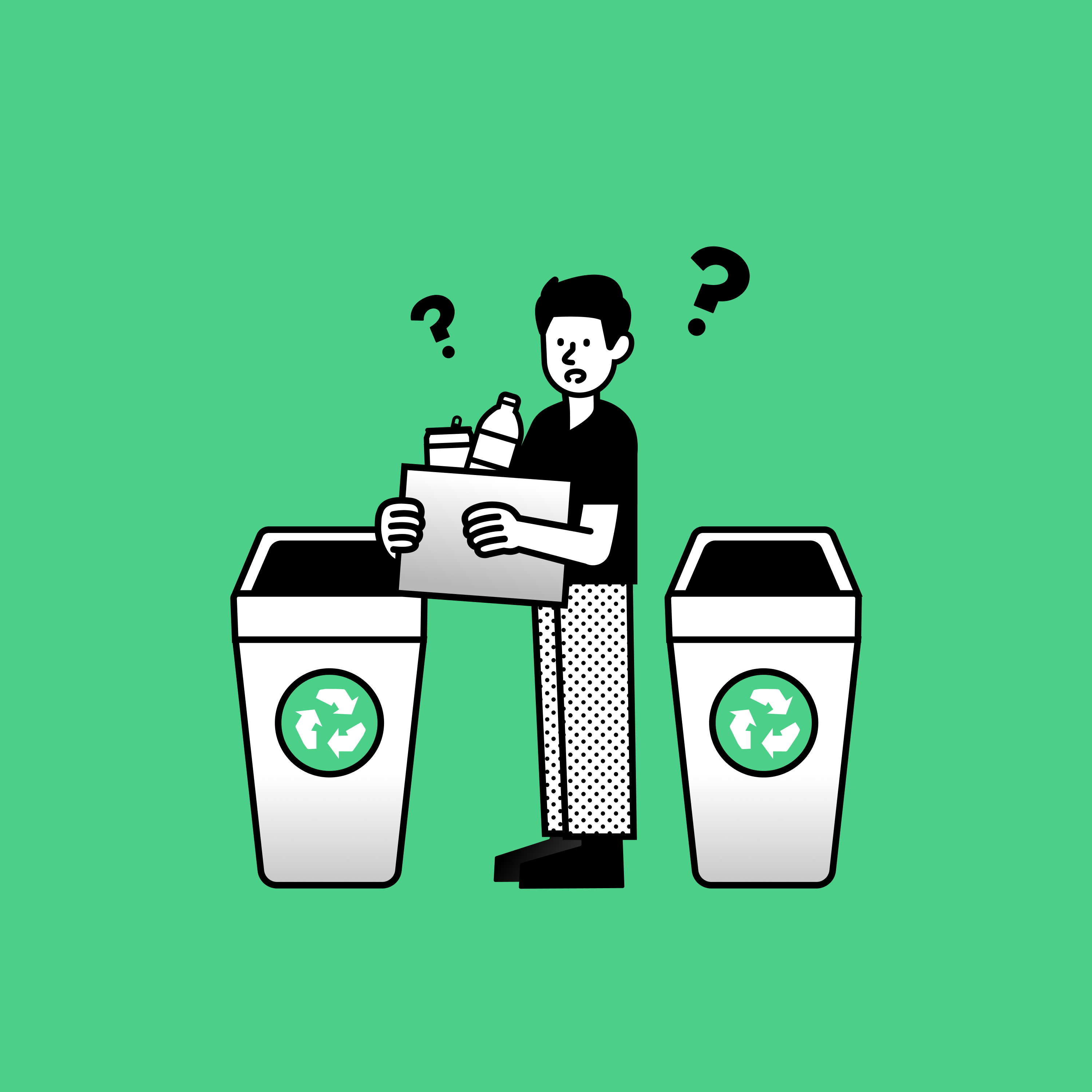
When a place becomes your home for a while, even the smallest daily routines shape the quality of your stay. Waste disposal is one of them.
During a short-term lease in Korea, whether you stay for a few weeks or several months, understanding the local waste management system helps you settle in comfortably from day one. Korea’s disposal rules are highly organized and strictly enforced, which can feel unfamiliar at first. Still, once you understand the basic structure, the system becomes easy to follow and supports a cleaner living environment for every tenant.
In Korea, waste is generally divided into three categories: Recyclables, Food Waste, and General Waste. This guide covers the core steps to manage your waste with confidence throughout your lease.
Core Essentials at a Glance
- Recycling Protocols: Follow the “Empty, Rinse, Separate” rule.
- Food Waste Criteria: Separate common food scraps from items that must go into general waste.
- General Waste Standards: Use the official district-specific trash bags.
- Building-Specific Rules: Always check your landlord’s guide and building notices.
1. Recycling in Korea
Recycling is a key part of Korea’s waste management system. To make your lease experience smoother, remember the three-step rule: Empty, Rinse, and Separate.
If a recyclable item is heavily contaminated and cannot be cleaned, do not place it in the recycling bin. It should be disposed of as general waste instead.

Pro Tip: Plastics should always be rinsed before disposal. Labels and caps are often made of different materials, so separating them improves recycling accuracy. Broken glass and ceramics are not recyclable. Small broken pieces should be wrapped safely before disposal, while large amounts or bulky pieces may require separate handling depending on local rules.
Recyclables are usually placed in designated bins within your building. Since collection methods vary by listing, always follow the instructions provided in your move-in guide or by your landlord.
2. Food Waste in Korea
In Korea, food waste is collected separately, and removing as much moisture as possible before disposal is essential. Depending on your building’s system, you may use a designated container, an RFID disposal machine, or official food waste bags.
One of the most common challenges during a short-term lease is knowing what counts as food waste and what does not. As a practical rule, everyday food scraps usually go into food waste, while hard, fibrous, or non-processable items usually go into general waste.
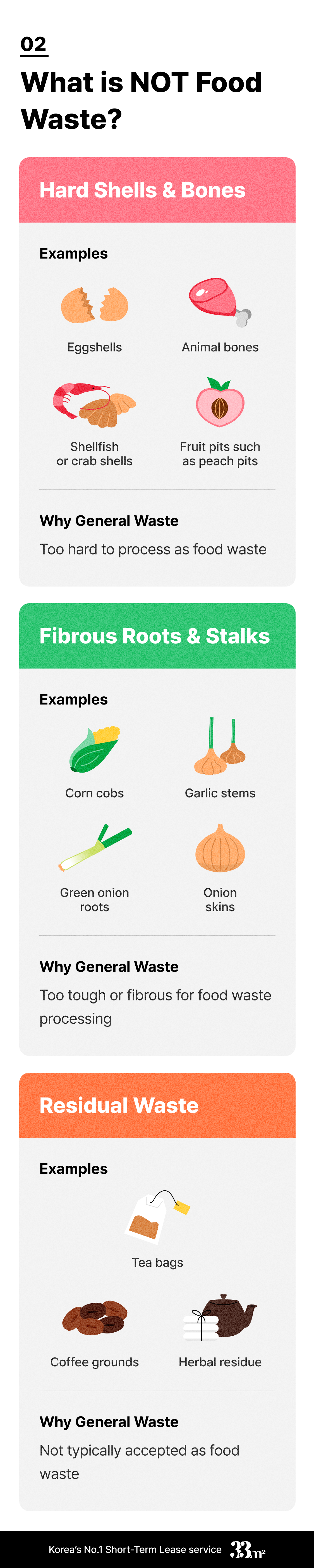
Because detailed standards can vary slightly by district or building system, it is always best to check the local guide provided for your unit.
3. General Waste in Korea
General waste includes anything that does not belong in the recycling or food waste categories. The most important rule is to use the official Pay-As-You-Throw (PAYT) bags, known as jongryangje-bongtu. These bags are specific to the district, or gu, where your unit is located. You can usually purchase them at nearby convenience stores or supermarkets.
Caution: Using a bag from a different district may result in your trash not being collected, and penalties may apply depending on local rules.
General Waste Includes
- Food-stained packaging that cannot be cleaned
- Hygiene items such as tissues, wet wipes, and cotton swabs
- Small broken glass pieces that have been wrapped safely before disposal
- Non-recyclable food waste items such as bones, shells, and pits
- Other household waste not accepted under local recycling or food waste rules
4. Trash Collection Schedules
Waste collection in Korea does not operate as a 24/7 service. Collection follows specific days and times set either by the local municipality or by building management.
Since collection schedules for general waste, recycling, and food waste often differ, you should always check the move-in guide for your unit.Following the correct schedule helps keep shared spaces clean and makes the experience more comfortable for both you and the next tenant.
5. FAQ
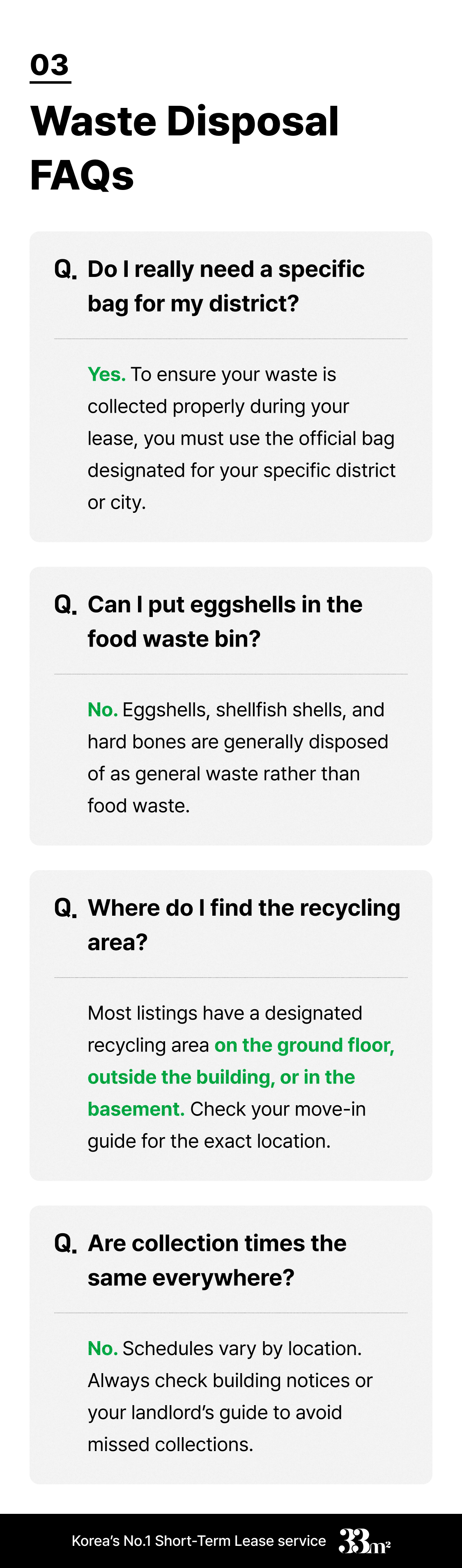
Q. Do I really need a specific bag for my district?
Yes. To ensure your waste is collected properly during your lease, you must use the official bag designated for your specific district or city.
Q. Can I put eggshells in the food waste bin?
No. Eggshells, shellfish shells, and hard bones are generally disposed of as general waste rather than food waste.
Q. Where do I find the recycling area?
Most listings have a designated recycling area on the ground floor, outside the building, or in the basement. Check your move-in guide for the exact location.
Q. Are collection times the same everywhere?
No. Schedules vary by location. Always check building notices or your landlord’s guide to avoid missed collections.
✅ Quick Summary: Waste Disposal for Your Lease
- Recycling: Empty, rinse, and separate by material.
- Food Waste: Remove moisture and exclude hard or non-accepted items.
- General Waste: Use only the official district-specific bags.
- Golden Rule: When in doubt, follow your building rules and the guide for your unit.
Mastering these small routines helps make your short-term lease in Korea feel smooth, practical, and comfortable—just like your own home.